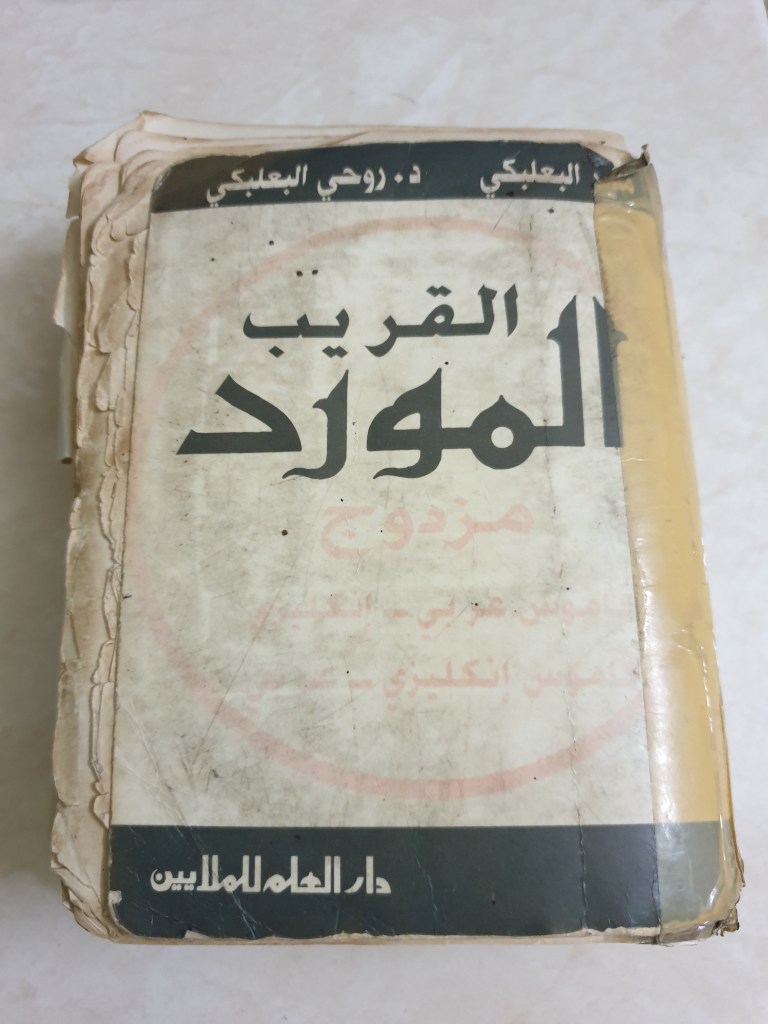
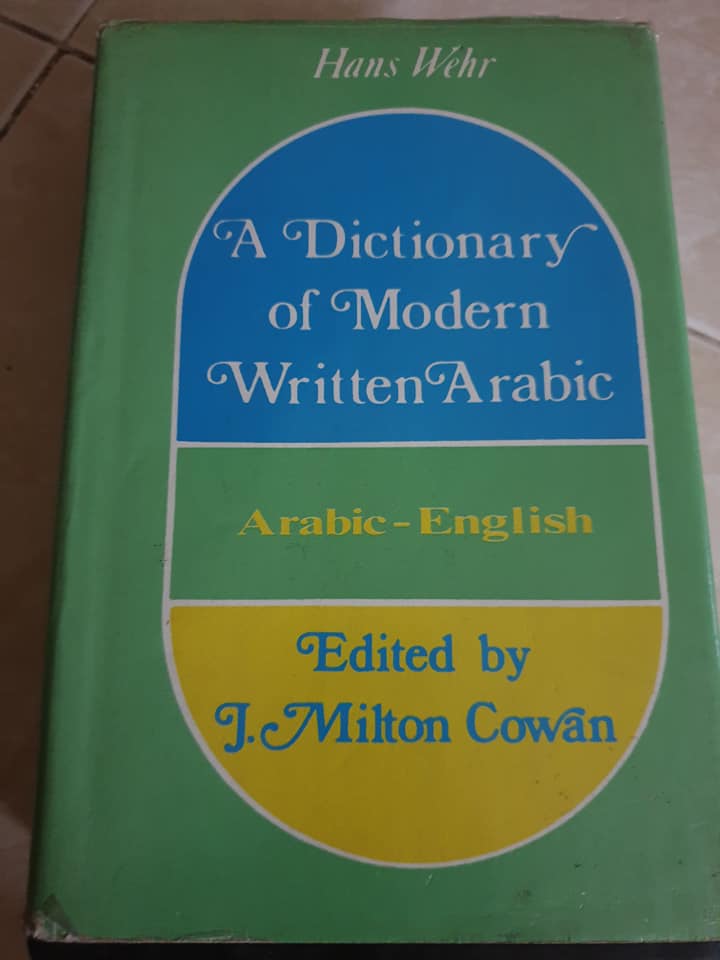
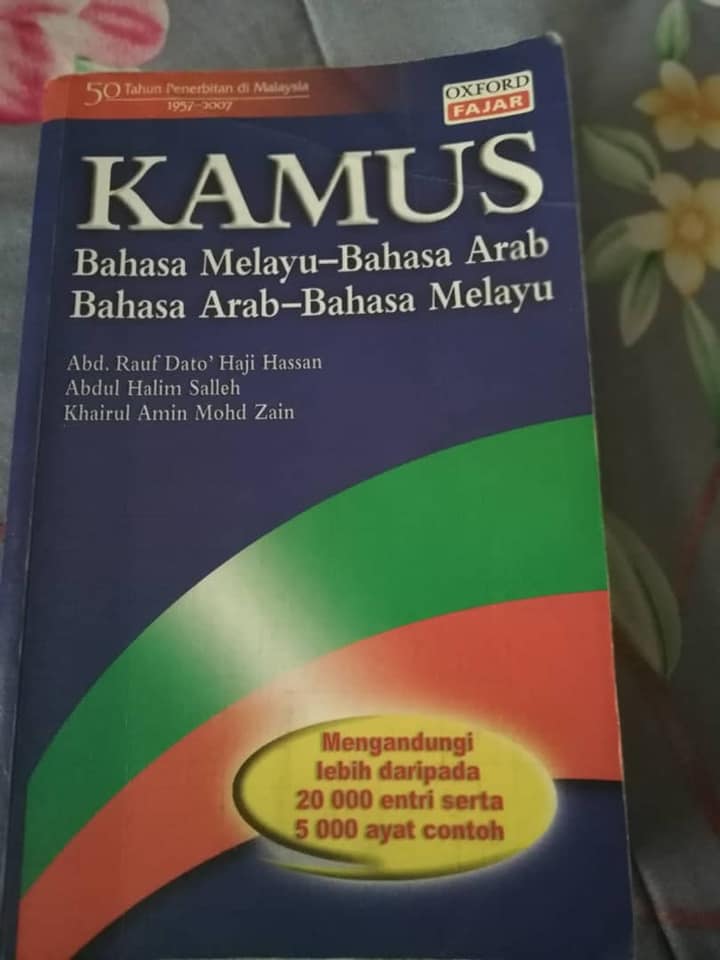
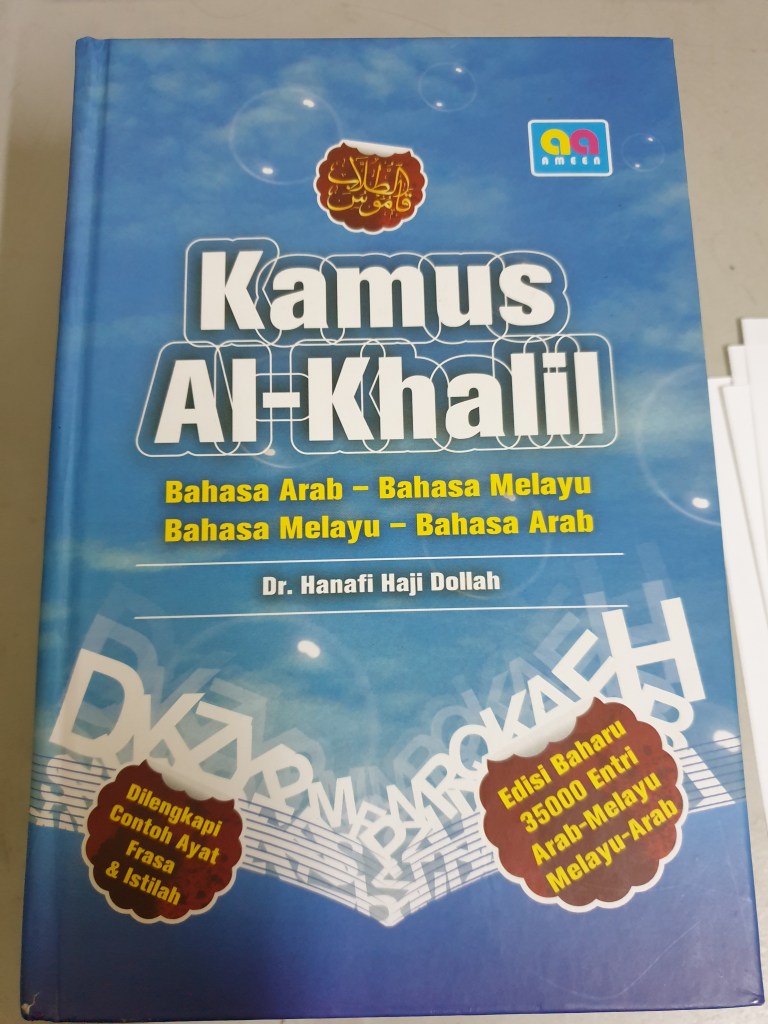
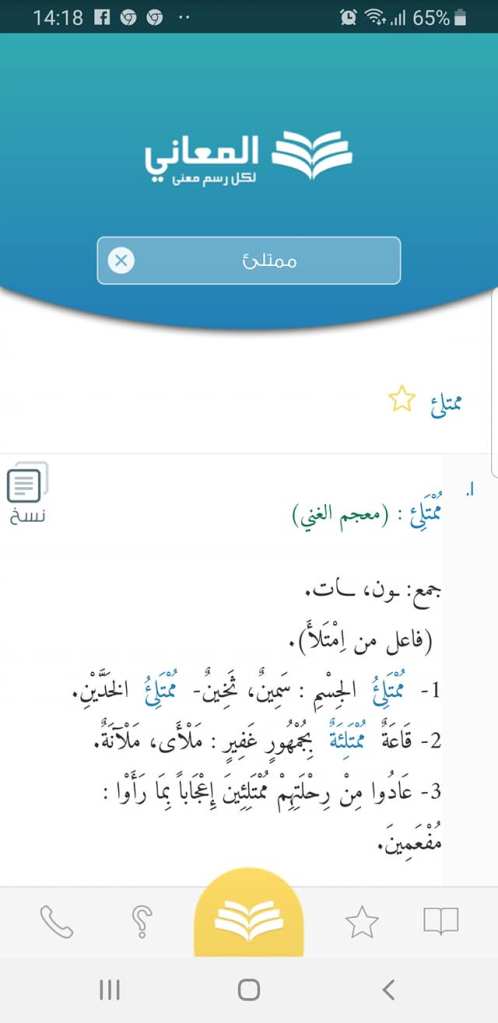
I have been a foreign language teacher to college students and adults for many years now and one of the things I take my time to teach is ‘dictionary skills’. This is because adult learners have the maturity to take control of their learning thus making it worthwhile to teach these skills. But before that, they need to get a PROPER dictionary. My advice for learners of Arabic:1. Avoid buying a dictionary containing 3 or more languages, eg. Arabic – Malay – English. This is because it is only useful for ‘concrete’ nouns/words like ‘table’ or ‘apple’. Later on, you would want to use more abstract words, like ‘life imprisonment’, and such words cannot be successfully explained in 2 other languages in the same dictionary. For beginners, you can use a children’s dictionary containing the 3 languages but later you need to buy a more advanced one. Children’s dictionaries are colourful so I understand the attraction. It motivates my students, especially ladies. 2. Avoid buying a dictionary which only lists down words and their translations (see photo 1). I call it a LIST, not a dictionary. Because it does not give the required information a learner needs like the word’s classification (اسم، فعل، حرف), a noun’s plural form (ج) and later on, additional information relating to a higher understanding of grammar (ممنوع من الصرف). In addition, at times learners need sample sentences to show how a word is used, something a mere list cannot provide.3. Do buy either an Arabic-Malay/Malay-Arabic dictionary or if your command of English is strong, buy an Arabic-Eng/Eng-Arabic one because English authors have come up with dictionaries earlier than Malay authors. Having said that, the Malay authors have improved by leaps and bounds in this area. 4. Understand that each dictionary has its advantages and disadvantages. The more you use a dictionary, the more you appreciate this.Normally a dictionary would use the traditional root-word entry. So for the word مدرسة, you would find it under the letter د not م. However, I find that modern dictionaries arrange their entries according to the spelling. Thus, مدرسة may be under م in these dictionaries. Either version is fine but perhaps you need a teacher to explain this, I think. 5. Also, different dictionaries serve different purposes. I was once a beginner, so I actively used a pocket dictionary, al-Mawrid (photo 2), a gift from my father when he visited Syria. Then, I started using Hans Wehr (photo 3), an Arabic-English dictionary because it is a very comprehensive, one-way dictionary for Arabic to English translation work. This was a gift from my student, Ustaz Ashafizrol. Now I have the Oxford Fajar Arabic-Malay/Malay-Arabic dictionary and another one called al-Khalil (photos 4 and 5), also gifts from my students. I usually recommend them to Malay-speaking learners. 6. Nowadays learners have begun to use online dictionaries. I find that men prefer the online ones. They are less cumbersome to bring to class. My favourite is al-Maany (photo 6) due to its wide coverage of sample texts in different fields. So a learner gets to learn different uses of a word in different contexts. Once you have found a dictionary, use it and if you do not know how, don’t be shy to ask your teacher to teach you. 
#ustazahcardiff #UCdictionary

 #ustazahcardiff